You’re driving down the road and a warning light comes on. Your first instinct might be to head straight to a shop — but that’s not always necessary. Modern diesel trucks store fault codes that tell you exactly what the truck’s computer detected and when. Knowing how to pull and read those codes yourself can save you a diagnostic fee, help you have a smarter conversation with a mechanic, and sometimes let you solve the problem without professional help at all. Here’s how it works.
What Are Fault Codes and Where Do They Come From?
Every diesel truck built after 1996 has an onboard diagnostic system that monitors hundreds of sensors and systems in real time. When something falls outside of normal parameters, the system logs a fault code and in many cases triggers a warning light on your dash. These codes don’t tell you exactly what’s broken — they tell you which system triggered the alert and why. The diagnosis still requires some thinking, but the code gives you a starting point.
OBD-II vs. Heavy-Duty Diagnostic Systems
Light-duty diesel trucks — your Ram 2500, Chevy Silverado 2500, Ford Super Duty — use the standard OBD-II port that you’ll find on any passenger vehicle. This is the same port under the dash that mechanics plug into at the shop. Heavy-duty commercial trucks use a different system called J1939, which requires a different type of scanner and connector. Make sure you know which category your truck falls into before you buy a scanner.
What You Need to Pull Codes
You don’t need expensive shop equipment to read fault codes on a light-duty diesel truck. Here’s what works.
Basic OBD-II Scanners
Entry-level handheld scanners from brands like Innova, Autel, or Launch run anywhere from $30 to $150 and will read and clear codes on light-duty trucks. They’re a solid investment for any truck owner who wants to understand what their vehicle is doing.
Bluetooth Adapters and Phone Apps
Bluetooth OBD-II adapters paired with apps like Torque Pro or OBD Fusion give you real-time data on your phone along with code reading capability. These work well for light-duty trucks and are an affordable option if you want ongoing monitoring rather than just occasional code pulls.
Heavy-Duty Scanners
For semi trucks and commercial equipment running J1939, you’ll need a purpose-built scanner. Tools from Nexiq, Noregon, or Cummins Inline adapters are what shops use. These are a bigger investment but essential if you’re maintaining your own commercial rig.
How to Pull the Codes
Light-Duty Diesel Trucks
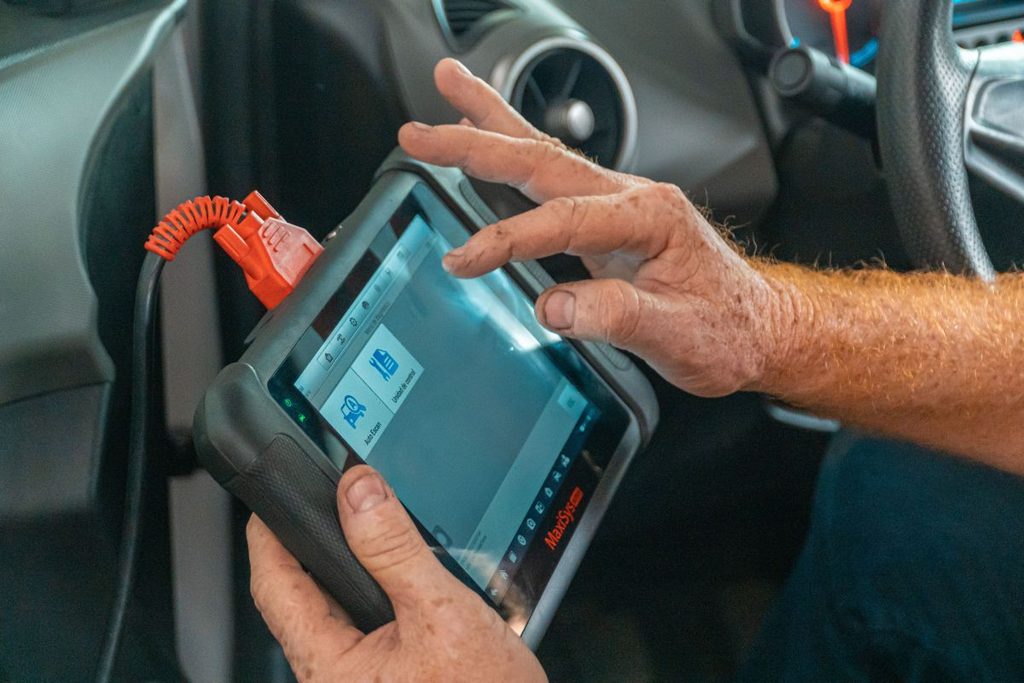
Locate the OBD-II port — it’s typically under the dash on the driver’s side, near the steering column. Plug in your scanner with the ignition on but the engine off. Follow the scanner’s prompts to read stored codes. Write down every code before you clear anything.
Heavy-Duty Trucks
The diagnostic port on commercial trucks is usually located in the cab, often near the dash or center console. Connect your heavy-duty scanner and follow the manufacturer’s software to pull active and inactive fault codes. Some trucks also have a built-in dashboard display that will show active fault codes without any external tool.
Common Diesel Fault Codes and What They Mean
Here Are Common Diesel Fault Codes and What They Mean.
P0087 — Fuel Rail Pressure Too Low
This code points to a fuel delivery issue. Common causes include a clogged fuel filter, a failing lift pump, or a restriction in the fuel supply line. Start with the fuel filter — it’s the cheapest and most common culprit.
P0401 — Insufficient EGR Flow
The EGR system recirculates exhaust gases back into the intake to reduce emissions. When flow is restricted, you’ll see this code. A clogged EGR valve or cooler is the usual cause on high-mileage diesels.
P20EE — SCR NOx Catalyst Efficiency Below Threshold
This is a DEF system code indicating the SCR catalyst isn’t converting nitrogen oxides efficiently. It could point to a failing catalyst, a contaminated DEF supply, or a NOx sensor issue. This one warrants attention before it escalates to a derate situation.
P0263 / P0266 / P0269 — Cylinder Contribution Codes
These codes identify a specific cylinder that isn’t contributing normally to engine output. Common causes include a faulty injector, low compression in that cylinder, or a wiring issue. These codes tell you which cylinder to investigate first, which saves significant diagnostic time.
P0483 — Cooling Fan Rationality Check
This code means the truck’s computer isn’t seeing the expected response from the cooling fan. It’s worth addressing before summer heat or heavy towing puts additional load on the cooling system.
When to Handle It Yourself vs. When to Call a Mechanic
DIY-Friendly Situations
A fuel filter replacement triggered by P0087, a low DEF level causing an SCR code, or a sensor that’s clearly failed and has a direct replacement — these are situations where a capable owner can handle the repair with basic tools and some research.
When to Bring in a Professional
Injector codes, cylinder contribution faults, internal engine codes, and anything involving the fuel injection system on a common-rail diesel are generally better handled by someone with the right diagnostic equipment and experience. Getting it wrong on a high-pressure fuel system is expensive and in some cases dangerous.
One Rule Worth Following
Never clear a code without writing it down first and understanding what triggered it. Clearing a code doesn’t fix the underlying problem — it just resets the warning. If the cause is still there, the code will come back. And if you clear it before a mechanic sees the truck, you’ve made their job harder and potentially yours more expensive.
Final Thoughts
Understanding your truck’s fault codes won’t make you a diesel mechanic overnight, but it will make you a smarter truck owner. Knowing what a code means, whether it’s urgent, and what the likely causes are puts you in a much better position — whether you’re fixing it yourself or walking into a shop with a clear head.
Have you dealt with a fault code situation on your truck? Share what it was and how you handled it in the comments. New posts on diesel maintenance and trucking go up every other week.